Feature Wall Ideas: Paint, Wallpaper and Panelling Options
Practical feature wall ideas using paint, wallpaper or panelling. What works in which room, what to avoid, and which option suits older York homes.
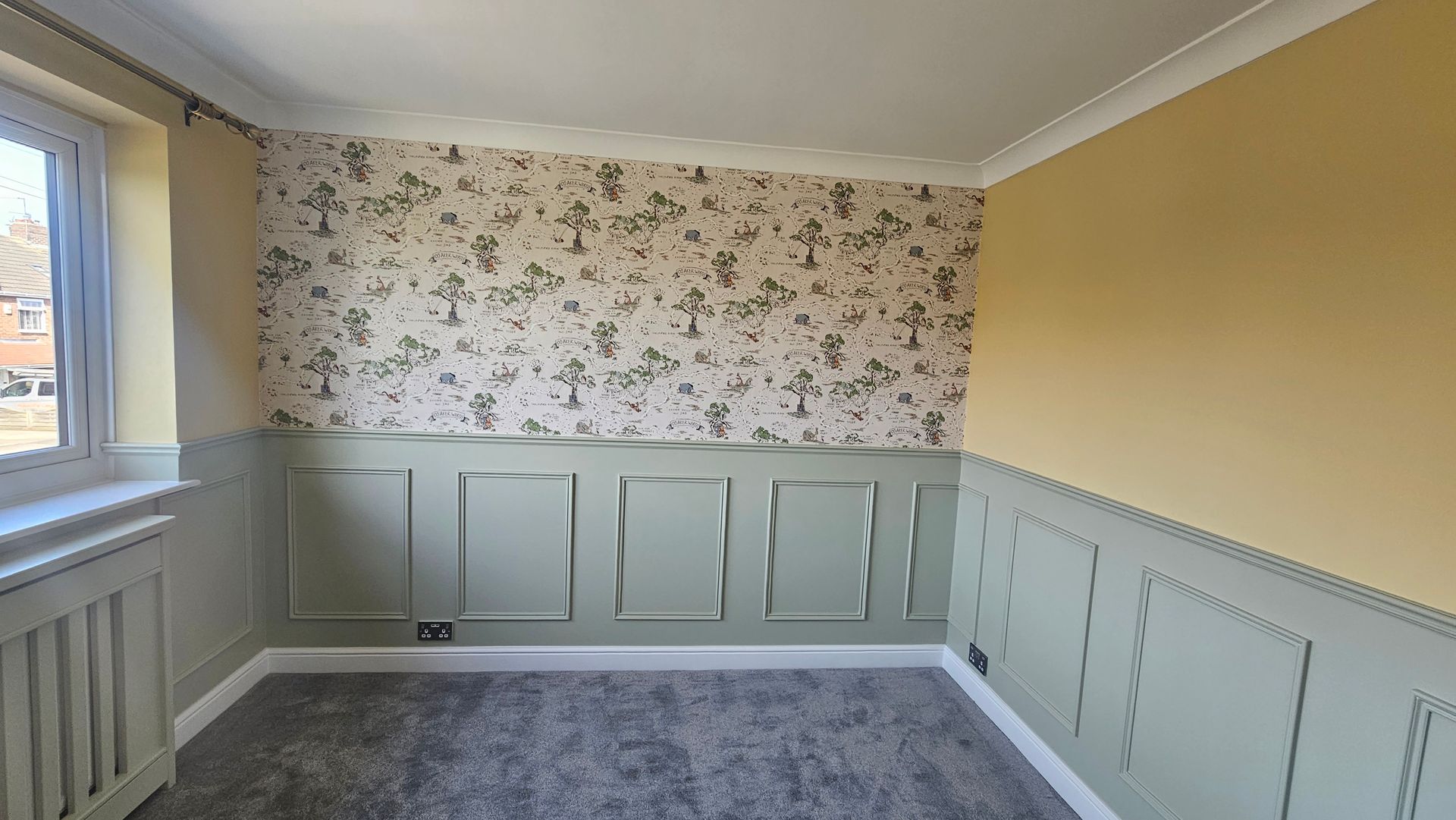
Feature walls had a moment in the early 2010s, fell out of favour around 2018, and quietly came back during the work-from-home years. They're not dead. They're just done differently now.
The mistake most people make isn't the colour or the wallpaper. It's the wall. Pick the wrong wall and the whole room feels off. Pick the right one and a single afternoon of work transforms a space that's looked tired for years.
Pick the wall before you pick the method
The feature wall should be the one your eye lands on when you walk into the room. That's almost always the wall facing the doorway, or in a long room the wall behind the largest piece of furniture (sofa, bed, dining table).
Don't feature wall the wall with the door in it. You'll never see it. Don't feature wall a wall broken up by lots of windows. The windows fight the feature. And don't feature wall the wall with the radiator unless the radiator becomes part of the design.
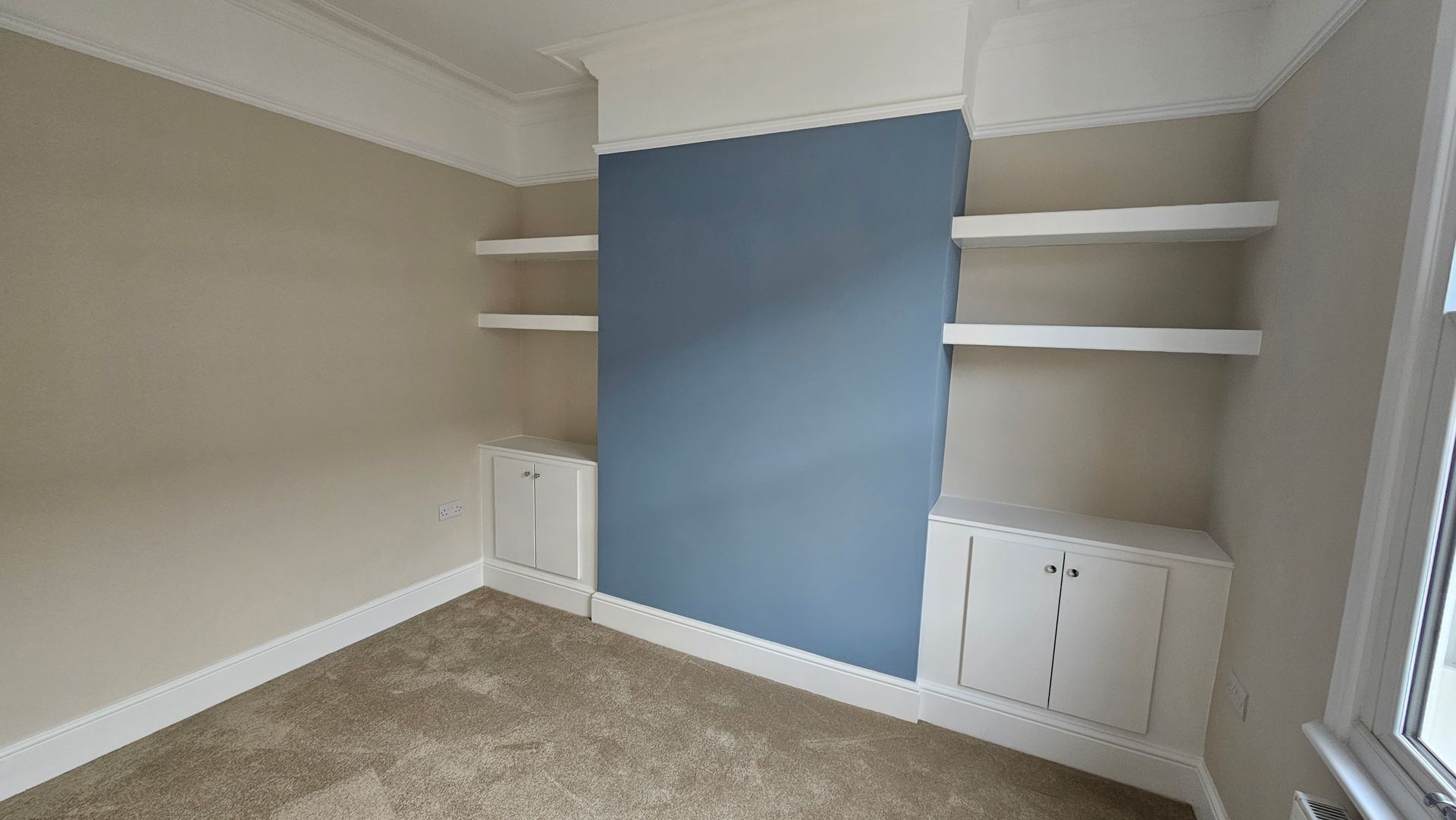
A darker feature wall can add depth in a small room, but the result depends on which wall is chosen, the light, the surrounding colours and the room's proportions. Test the colour in the actual space rather than assuming dark always makes a room feel larger.
Method one: Paint
The cheapest and most reversible option. A tester pot, a small roller, and an afternoon. Done.
Modern feature walls in paint tend towards depth rather than contrast. Instead of one bright wall against three neutrals, the trend is for the whole room in a soft tone with the feature wall in a deeper version of the same family. Think mushroom-and-mocha, sage-and-forest, off-white-and-stone.
Colour drenching is the more committed cousin: the same dark shade on walls, ceiling, woodwork, and radiators. It removes visual breaks and makes small rooms feel like jewel boxes. Works particularly well in box rooms, snugs, and downstairs WCs.
Finish matters as much as colour. A flat matt sucks light and creates atmosphere. Eggshell adds a slight sheen and bounces light back. Silk is rare on feature walls now (it shows every imperfection in the plaster underneath, which is fine on a smooth new surface but unforgiving on older walls).
Method two: Wallpaper
Wallpaper now spans traditional and contemporary finishes, but ease of hanging and removal varies by paper, adhesive, wall preparation and installation. A bold wall can create an artwork-like focal point without covering every surface.
Three patterns work especially well as feature walls:
• Large-scale botanical or floral, on a contrasting base colour, for living rooms and bedrooms.
• Geometric or art-deco influenced, for entrance halls and dining rooms.
• Textured wallpaper (grasscloth, faux concrete, raised pattern) for offices and snugs where you want depth without colour commitment.
Murals are a separate category. A single large-scale mural across one wall reads more like an installation than a feature wall. Best in spaces with high ceilings and uninterrupted wall space.
A note on older York properties: many of our customers in pre-war terraces have walls that aren't perfectly flat. Wallpaper highlights every dip and bow because the pattern doesn't lie. If your wall is uneven, either skim it first or pick a textured paper that disguises imperfections. A patterned paper hung over a wavy wall looks worse than a flat painted wall, even if both walls were technically usable.
Method three: Panelling
MDF panelling is a popular alternative to a flat painted feature wall because it adds depth, shadow and joinery detail. It can suit many property eras when the profile and proportions are chosen carefully. We cover the main options in our MDF wall panelling ideas guide.
• Shaker panelling (half height or full height) for living rooms, dining rooms, and bedrooms.
• Board and batten for entrance halls and stairwells, where it adds vertical line and protects against scuffs.
• Geometric or grid panelling for bedrooms behind the bed, replacing the headboard entirely.
• Full-height tongue-and-groove for cottage-style rooms and bathrooms.
Panelling sits between painting and joinery in cost and skill. A simple board-and-batten feature wall fitted professionally is reasonable for the visual impact you get. A geometric grid with mitred joints is more involved and the labour reflects that. Worth getting a proper joinery quote for anything beyond simple horizontal bands.
Room by room: which method fits where
Living rooms
Paint or panelling. Wallpaper works but is the riskiest of the three because the room sees the most use and the most variety of lighting through the day. A patterned paper that looked stunning at the sample stage can fight your furniture under evening lamplight.
Bedrooms
All three work, with wallpaper having the strongest case. The wall behind the headboard is uninterrupted, doesn't take heavy wear, and gets fewer hours of harsh light than a living room. A bold pattern here changes the whole feel of the room without committing you to it forever.
Dining rooms
Panelling and deep paint colours dominate. Dining rooms work best with atmosphere, and atmosphere comes from depth. A dark forest green or deep navy on a panelled feature wall, with lighter walls around it, creates a room you actually want to sit in for three hours after dinner.
Kitchens
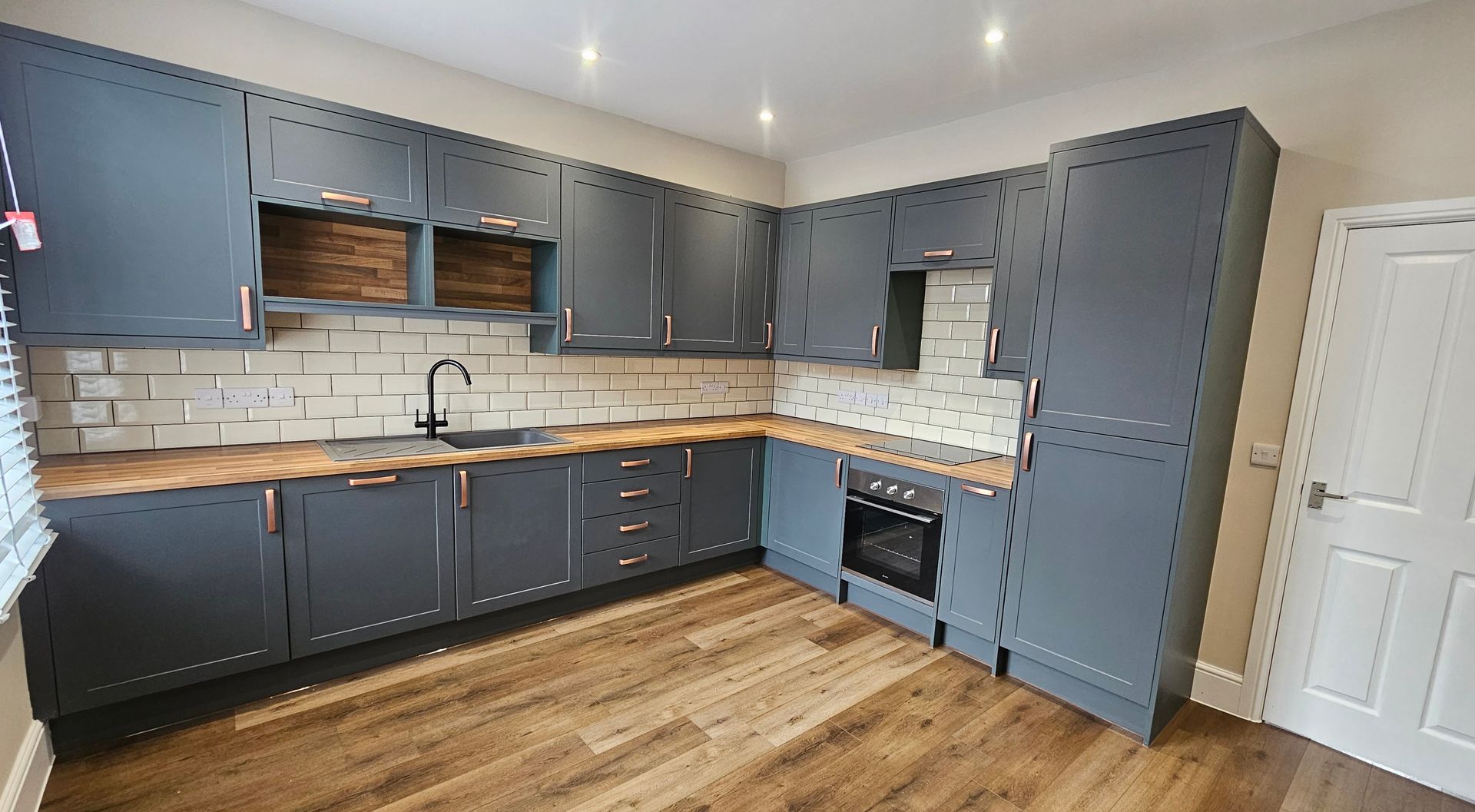
Generally avoid traditional feature walls. The visual focal point in a kitchen should be the cabinetry, the worktop run, or the cooking area. If you do want a feature, the best approach is to colour-spray the kitchen cabinetry itself rather than treating a wall as separate. Our guide on kitchen cabinet spraying vs replacing covers when this works best.
Hallways and stairwells
Panelling wins here. Hallways and stairs take a beating from bags, shoes, school coats, and dogs. Painted feature walls scuff. Wallpaper tears. Board-and-batten or tongue-and-groove panelling absorbs the damage and looks better as it ages.
Bathrooms
Specialist wallpapers and panelling only. Standard wallpaper doesn't survive the humidity. Moisture-resistant tongue-and-groove or beadboard panelling, sealed properly and painted in eggshell, holds up well in family bathrooms.
Cost considerations
In rough order from cheapest to most expensive: paint, wallpaper, panelling. Within each method the spread is wide, depending on materials and how much wall you're treating. DIY paint costs little more than a tester pot and a roller. Professional paint adds labour. Wallpaper varies enormously by the paper itself, from supermarket rolls to designer prints. Panelling is the most expensive on a like-for-like basis because of the joinery time involved, but tends to deliver the biggest visual change.
The right way to budget is to get a quote that includes any wall prep, materials, and finishing in one figure. Anything quoted as a single low headline number usually has prep or finishing costs hidden behind it.
Mistakes to avoid
The most common mistake is treating the feature wall as a standalone decision. The feature should sit within the room's wider palette. A bottle-green feature wall in a room with magnolia surrounds feels arbitrary. The same green in a room of soft sage tones feels deliberate.
Second mistake: scale. A small-pattern wallpaper on one wall in a large room disappears into the background. A large-pattern paper in a small room overwhelms it. Scale the pattern to the wall, not to the swatch.
Third mistake: ignoring the actual light. Sample paint and paper on the wall you plan to treat and review it in daylight and artificial light. Orientation, window size, neighbouring buildings and lamps all affect how a colour or pattern reads, so avoid relying on a simple north-facing rule.
Free assessment
We cover the full range of feature wall options across York and the surrounding areas. Paint, wallpaper hanging, and MDF panelling are all part of our standard plastering and decorating services. If you're not sure which method suits your room, we can have a look during a free quote visit and give you honest advice on what'll work. Call 07940 099 976 or visit our contact page to book a visit.